The airlines that added bag fees most quickly and on the most bags last year are exactly the ones that had the largest year-over-year revenue fall in this year's first quarter. Good. Via Kottke.
Showing posts with label travel. Show all posts
Showing posts with label travel. Show all posts
Tuesday, October 13, 2009

Monday, April 13, 2009
Exxon is betting Americans will never again purchase as much gasoline as they did in 2007.
Tuesday, March 24, 2009
Tuesday!
* Cold fusion is back. More here. We're saved!
* Radiology art. (Hat tip: Neil.)
* My pursuit of all Wes Anderson-flavored cultural ephemera has led me to this video from Company of Theives, as well as Tenenbaum Fail. Via Fimoculous.
* The first eleven episodes of Quantum Leap are up at NBC.com.
* Anarctica travel blog.
* Who was dead at your age?
Sunday, November 02, 2008
Scenes from a life: my overnight bag, precisely where I left it before leaving the house for our trip to Chicago Friday morning, a crucial error realized precisely in the moment in which it was too late to go back to get it.
I find my intense stupidity makes life much more interesting.
Sunday, July 06, 2008
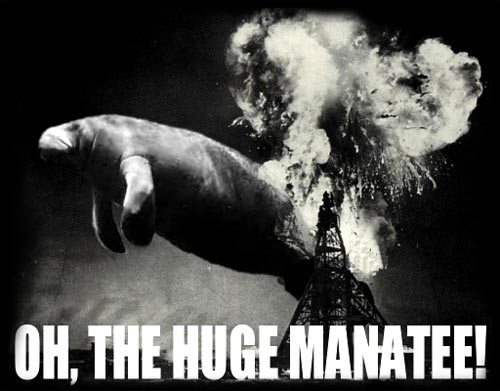
It has been more than 70 years since the giant Hindenburg zeppelin exploded in a spectacular fireball over Lakehurst, N.J., killing 36 crew members and passengers, abruptly ending an earlier age of airships. But because of new materials and sophisticated means of propulsion, a diverse cast of entrepreneurs is taking another look at the behemoths of the air.
(via Boing Boing, which couldn't help itself)
Tuesday, May 20, 2008
Inside Higher Ed looks at the practice of "double-dipping" in academic conference presentations, i.e., giving the same talk more than once.
As Nelson C. Dometrius, a professor of political science at Texas Tech University, writes in his introduction to the journal’s debate, when he raised the question with senior faculty members, he received mixed reactions, with people quickly outlining special cases where they viewed such “double dipping” as justified. When he posed the same question to graduate students, Dometrius relates, “the modal reply was a blank stare — a lack of comprehension that presenting the same paper as many times as you wished would be viewed by anyone as an unusual or questionable practice.”The idea that double-dipping should be discouraged in anything but the most marginal cases, in which huge audiences have heard the same talk more than once, is indeed pretty foreign to me—but then again I think the real issue here is that the obscenely wasteful practice of academic travel should be widely curtailed, if not abolished outright. In the vast majority of cases, these conferences could have had the same or better results through teleconference technology, YouTube, or on a message forum on the Internet—there's no excuse for lefty academics to be paying so little attention to the size of their carbon footprints.
That I personally find academic conferences to almost always be a fairly dull affair has little to do with this analysis.


 Posts
Posts