My blog has moved!

You should be automatically redirected to the new home page in 60 seconds. If not, please visit
http://gerrycanavan.com
and be sure to update your bookmarks. Sorry about the inconvenience.

Showing posts with label violence. Show all posts

Tuesday, September 15, 2009

Quote of the day.

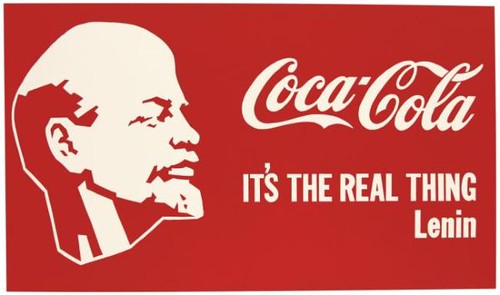
Lenin told the British science fiction writer H.G. Wells, who interviewed him in the Kremlin in 1920, that if life were discovered on other planets, revolutionary violence would no longer be necessary: "Human ideas—he told Wells—are based on the scale of the planet we live in. They are based on the assumption that the technical potentialities, as they develop, will never overstep 'the earthly limit.' If we succeed in making contact with the other planets, all our philosophical, social and moral ideas will have to be revised, and in this event these potentialities will become limitless and will put an end to violence as a necessary means of progress."
—Susan Buck-Morss, Dreamworld and Catastrophe: The Passing of Mass Utopia in East and West (2002)
A bonus image, archived in the same book:

Tuesday, August 25, 2009

Traxus considers survival horror:

There are ‘left’ and ‘right’ versions of the zombie myth, but the message is always the same: the horrors wrought by humanity in extremis are always worse than the zombies.The absolute manichean split between human and zombie is insisted on only to be ’shockingly’ deconstructed, with all other differences either elided or made to look ridiculous by comparison. Like them, we must kill to live, even if there is no reason to go on (civilization is destroyed, etc.). We are them, they are us.
while Alex Greenberg considers Tarantino:
Tarantino does not critique violence. He loves it. The parodies of violence in Kill Bill are not criticisms aimed at violence but criticisms aimed at film. He wants filmmakers to understand that they can make violence fun and to revel in this fact. Of course, for him, film is film and real life is real life, and I agree that one cannot draw a connection between violent acts in film and violent acts in "the real world." But I would add that the relationship between ideology and action is always an ideological one: it shapes opinions and attitudes, forming how people look at the world, in this case, one starkly divided between good and evil, as Eli Roth said in an interview with The Onion AV Club: "[My character is] not taking pleasure in killing. He’s fighting evil on behalf of those who can’t fight. He knows he’s the biggest and strongest one in the bunch, and he wants to terrorize them. But he’s doing it to stop evil." This would sit very well with my "Bible and the Holocaust" professor, who viewed human history as a gigantic contest between David and Hitler. But for those of us who are stuck in the realm of the human, this film adds nothing to the conversation.

It's a bit hard for me to understand the person who has heard of both Quentin Tarantino and the Holocaust, who then willingly goes to see a Quentin Tarantino movie about the Holocaust, and yet leaves the theater afterwards claiming to feel "offended." Putting aside the highly fraught question of what exactly it is we mean when we say we are "offended," do you really expect us to believe you didn't know in advance what you were walking into? (See TNR for an example of this sort of strange reaction. Writing as if his meaning were clear beyond all possible clarification, Isaac Chotiner proclaims: "[T]he film is one of the most morally repulsive movies of the past decade." In what respect, Charlie?)

Traxus and I spent some time after the film trying to puzzle all this out, but our discussion bounced around the question of whether Inglourious Basterds was completely without moral content (my initial inclination) or else the morally weightiest of Tarantino's films (Traxus's take and the one I eventually came around to, though it's not exactly incompatible with the first).

Spoilers about the end of the film follow.

What we were specifically trying to work out was the way the film-within-a-film works as an (obvious) metacommentary on the whole, with a shot-reverse-shot logic that repeats itself almost exactly inside and outside Nation's Pride. This, Traxus was arguing, suggests a kind of formal moral equivalence between the Nazi enjoyment of their propaganda film and our enjoyment of ours, on at least two levels. First there is the level of content, which we both agree is the weaker of the two. (Nazis constitute a threat that is now so vanquished as to seem completely impossible and even cartoonish, and the impossibly excessive fantasy of a alternate history in which Hitler is machine-gunned to death by Jewish-American GIs breaks whatever remaining hold the catharsis of the moment might have held on us.) But on the level of subject position Traxus has, I think, a much better point—the can't-miss-it repetition of shot-reverse-shot, over and over, really does suggest the audience's willing construction of this violence in a way that approaches actual moral weight.

But for my money it's the scene that follows the cinema massacre that finally implicates the audience in this fantasy of brutal violence. Faced with the unhappy choice between letting Nazi Hans Landa walk away from the war a false hero or else executing him against orders, Brad Pitt's Aldo Raine squares the circle by carving a swastika into Landa's head (but otherwise letting him live). It's an act he's done earlier in the movie, but the callback is (first) a moment of genuinely pleasurable narrative cleverness that (second) turns rapidly disturbing as the actual scarring is performed on-screen. Several bloody shot-reverse-shots later, Aldo says something like "I think this is my masterpiece" directly into the camera, followed by an immediate cut to the credits: WRITTEN AND DIRECTED BY QUENTIN TARANTINO, with Tarantino thereby claiming his guilt/authorship over all these events and, by implication, once again accusing us of our participation in them.

Only here do I feel as though Tarantino has drawn out my dark side. Everywhere else, the violence in Inglourious Basterds is not pleasurable, at least not for me. (There's also not all that much of it, hyperbolic reviews aside; most of the film is calm dialogue.) I don't revel in violence, even against Nazis, and I'm no more glad to see an actor playing Hitler pretend to be shot than I would be to see him pretend to get away. The cinema fantasy scene and the film's other violent set pieces have, I think, no real vibrancy to them; it's only Hans Landa who gets under my skin and exposes my inner possibilities of hate to light. (And I don't think it's exactly fair to blame Tarantino for something that was inside me all along.)

While not exactly parodic, the rest of the violence does take on (for me) a cover-charge quality, a price that must be exacted to get to the good stuff. And there's quite a bit of good stuff here; this is a great and enjoyable film, with good acting, typically skilled directing, and a better-than-expected script. If it's not exactly a perfect film, it may well be a perfect Tarantino film. And I would humbly suggest that anyone who likes Tarantino's other films, but hates this one, isn't evaluating this one on the merits but is instead letting the fear of irreverence towards the Holocaust cloud their aesthetic judgment. It is, to butcher Adorno, still possible to make an exploitation flick after Auschwitz.
Wednesday, June 10, 2009

A 88-year-old gunman— by reports a white supremacist and birther—opened fire earlier today at the Holocaust Museum. (Early reports that no one was killed have become inaccurate; a security guard has now died. TPM has running updates.) The suspect was arrested twenty-eight years ago for attempting to perform a citizen's arrest of the Federal Reserve Board. His writings have been widely circulating on the Internet.

In light of today's shooting and the George Tiller assassination, both Steve Benen and Matt Yglesias remember the Homeland Security report from earlier this year that caused so much manufactured controversy, which had warned against the threat of precisely this sort of violence from political extremists.

Friday, February 20, 2009

Friday night links while I wait for Jaimee to get home so I can watch some science fiction and turn my brain off.

* George Will is in the news this week for his latest stunningly dishonest column on climate change, which the Washington Post has perversely decided to stand behind. The statement from the paper's ombudsman is here.

* The EPA under the Obama administration will finally be able to take carbon seriously.

* Secure website authentification questions.

* Howard Machtinger looks back at his participation in the Weather Underground to acknowledge the group's failures. Via MeFi and Matt Yglesias.

While “New Morning” signaled the WU’s commitment to taking greater care after the accident to target property and not people, it did not acknowledge the WU’s own responsibility for the politics of the Townhouse collective.

WU leaders––then and since––failed to reckon candidly and directly with what it meant, politically and humanly, that core members of the organization had planned to use fragmentation bombs to kill attendees at a dance.
* The complete Pac-Man dossier: everything there is to know about the game, from ghost logic to how to play the kill screen. Via MeFi.

* Hard to believe we've all outlived Late Night with Conan O'Brien. I haven't watched the show in years, but it was formative to my sense of "funny" as a teenager. Here's Colbert saying goodbye the only way he knows how.

* Wither Burris? It doesn't look good for the man nobody wanted to be Senator anyway.

Tuesday, January 20, 2009

Cool pair of posts at Ads without Products and Infinite Thought on kill-counts in video games. Here's A w/o P:

The other mode of play, however, offers what we might call a utopian revision of the game played in the first part - if a vision of war can ever rightly be called utopian. This is the multiplayer mode, where you sign on and can join a game set in one scenario or another against other human beings who have logged on to play against you. In each case, you pick a side to join - the Americans, or in the case of most of the scenarios, some sort of Middle Eastern army or resistance movement, a hybrid I suppose of the Iraqi national army and Hamas. But, in order to make the game fair and attractive to players, whichever side you select you choose from the same sets of weapons, and have the same ability to call in airstrikes or UAV reconaissance missions. Asymmetrical war has been rendered symmetrical for the sake of fun and sportsmanship - it is an odd sight to see, F16s flying over a photorealistic Falluja dropping clusterbombs on American Marines, but one that you accept for the sake of the game. Suspension of disbelief, a fair fight, a kill-to-die ratio of approximately 1-1 in the case of all but the best and worst players, whichever side they prefer to fight on.

Tuesday, October 14, 2008

"This topic brings me to that worst outcrop of herd life, the military system, which I abhor... This plague-spot of civilization ought to be abolished with all possible speed. Heroism on command, senseless violence, and all the loathsome nonsense that goes by the name of patriotism -- how passionately I hate them!
Einstein, anti-nationalist, via Cogitamus.

Thursday, August 21, 2008

Premise Ten: The culture as a whole and most of its members are insane. The culture is driven by a death urge, an urge to destroy life.
The premises and other excerpts from Derrick Jensen's anarcho-primitivst tract Endgame are online, a polemic that quickly leapfrogs past the ecotage tactics of groups like ELF to essentially call for open, final warfare against capitalism.

I think we all know that goes.


Friday, January 18, 2008

Friday morning links.

* Rest in peace, Bobby Fischer. Here's the traditional MetaFilter obituary with a lot of dots, a lot of stupid chess puns, and a lot of links. And here's a post from the early days of Backwards City on Fischer's 2004 arrest in Japan, which also includes a link to the rules for "Full Chess" that Fischer devised for greater variety and challenge.

* But the link between watching football — specifically college football — and violence may not be a myth. A new study by researchers at the University of Colorado at Denver examines whether assaults and other forms of aggressive behavior increase when major college football teams play home games, and finds that they do. More strikingly, perhaps, incidences surge most when upsets occur — whether the home team wins or loses.

* Bush considering $800 bribe tax rebate to help spur economy. Money can't buy you love, Mr. President.

* In both the Washington Post (link fixed) and New York Times this week are articles pooh-poohing the Air Car, a $2500 high-efficiency vehicle scheduled to go into production in India this year. In addition to the absurd hypocrisy involved in the U.S. lecturing anyone on greenhouse gases or wasteful consumption, the greater point to take away from all this is that the decades-old Big Lie of globalization is again being exposed before our eyes. It has never and will never be the point of globalization to enrich poorer countries and bring them "up" to a Western standard of living; that's just the story we tell ourselves whenever someone reminds us that our sneakers are made by little slave kids. Now that it looks as if nations from the Global South actually could begin to made headway towards a Western standard of living, how does the West react? We recognize this moment not as the happy culmination of sixty years of economic charity and beneficence—finally, our hard work has paid off! the rising tide has lifted all boats!—but instead as a economic, environmental, and geopolitical disaster. We're terrified to be faced with the thing we always claimed we were working towards.