Thursday!
* I'll be posting this year as a HASTAC Scholar at the Humanities, Arts, Science, and Technology Advanced Collaboatory. My first post is about status update activism of the sort that is all over your Facebook newsfeed today.
* Speaking of health care, Olympia Snowe now runs your health care.
* LRB makes an impressively desperate bid for my attention with Fredric Jameson's review of Margaret Atwood's The Year of the Flood alongside reviews of Inglourious Basterds and Inherent Vice.
* Madoff-mania: The SEC—which he claims he was shortlisted to chair (!)— now admits it badly mishandled multiple investigations of his company. Still more here.
* Kevin Carey nicely notes the difficulty inherent to blogging about a book you're two-thirds through with. Another post or two on Infinite Jest soon. The total collapse of blogging at A Supposedly Fun Blog is one of the great disappointments of Infinite Summer, I think.
* Hiding adjuncts so the U.S. News rankings can't find them. Meanwhile, this year's Washington Monthly undergraduate rankings leave Duke out of the Top 25.
* So you've invented a board game. (via)
* 68 Sci-Fi Sites to See in the U.S.
* And Gawker declares the Michael Cera backlash has officially begun.
Thursday, September 03, 2009

Friday, July 31, 2009
 There have been some interesting Infinite Summer posts about whether Infinite Jest "counts" as science fiction—see, for instance, these two at Infinite Tasks and this from Chris Forster)—so I thought it might be interesting to run through some of my standard classroom definitions of science fiction and see how the book shapes up. (My notes on this are older than the Wikipedia page and mostly cribbed from Fred Chappell, but most of these definitions appear there as well.)
To begin with, there are a few classic definitions it clearly doesn't meet.
...a charming romance intermingled with scientific fact and prophetic vision.Versions of this notion of "scientific prophecy" pop up whenever science fiction is discussed, and Infinite Jest pretty clearly meets neither criteria; its speculations are philosophical, not scientific, and it is surely a satire, not some coherent futurism.
—Hugo Gernsback
Another take:
Science fiction is a branch of fantasy identifiable by the fact that it eases the "willing suspension of disbelief" on the part of its readers by utilizing an atmosphere of scientific credibility for its imaginative speculations in physical science, space, time, social science, and philosophy.I would defy anyone to claim that their willing suspension of disbelief is not frequently and fatally challenged by the hyperbolic "hysterical realist" elements throughout IJ. "FREAK STATUE OF LIBERTY ACCIDENT KILLS FED ENGINEER: BRAVE MAN ON CRANE CRUSHED BY 5 TON CAST IRON BURGER" (398) is not a sentence calculated to brace a spirit of credulity.
—Sam Moskowitz
Still another:
Science fiction is anything published as science fiction.
—Norman Spinrad
 This is usually the last definition I offer my students in my introductory SF lecture, and the one I usually argue is the most important. SF is, as much as it is anything else, a discrete, recognizable set of consumer practices and preferences—and here, too, Infinite Jest is clearly not science fiction because it isn't branded as science fiction in the marketplace nor is it consumed as science fiction by "science fiction fans." IJ pulls in dollars under an entirely different brand, mainstream literary fiction—which is a perfectly cromulent brand, if that's what you're into, but it's not SF.
So, then, 0 for 3. Not a great start. But there are other definitions of science fiction that do cast a strong light on Infinite Jest:
Science fiction is the search for definition of man and his status in the universe which will stand in our advanced but confused state of knowledge (science), and is characteristically cast in the Gothic or post-Gothic mold.Here science fiction collapses into a special category of existential literature, in which the SF aspects are merely the engine motivating the text's more-central philosophical speculations. The science-fictional elements in Infinite Jest, it seems clear to me, are operating almost entirely on this level—each inventive speculation in the novel drives existential speculation about how we might be able to live in ultratechnological modernity in the shadow of the death of God. (Side question: is Infinite Jest "in the Gothic mold"? I'd have to pull out an entirely different set of quotes to discuss that question fully, but in its massive textual sprawl, its strong tendencies towards melodrama and hyperbolic excess, and its palpable atmosphere of both individual and familial tragedy I think we could have the start of a fairly strong case.)
—Brian Aldiss
We come now to the two definitions I use most commonly in my writing and teaching, which are (I concede) are completely in conflict with one another. But I think—I hope—it's a productive tension. First is Darko Suvin, who inspired Fredric Jameson and most of the Utopian school of SF theorists I primarily read:
SF is, then, a literary genre or verbal construct whose necessary and sufficent conditions are the presence and interaction of estrangement and cognition, and whose main formal device is an imaginative framework alternative to the author's empirical environment. —Darko SuvinThere's a lot to pull out there, but the key words are "estrangement," "cognition," and "imaginative framework alternative." What Suvin argues in his work is that the defining characteristic of science fiction is the pwower of defamiliarization that allows us to see our own world more clearly (and maybe for the first time), which is accomplished through the sort of intricate, even obsessive world-building confabulations SF is famous for. In particular, Suvin and his successors argue, SF expresses the desire for another kind of life, whether explicitly (as Utopian fiction) or implicitly (the desire for a plausible alterity expressed in negative in most dystopian, anti-Utopian, and apocalyptic fictions).
 Infinite Jest, it seems to me, is pretty deep in the murky swamp that divides this sort of SF from more generic Utopian/dystopian political satire. The trouble for any Suvinian analysis of Infinite Jest, I think, comes in the unstable irony I was going on about earlier in the week; as Infinite Tasks lays out in detail, O.N.A.N.-ite politics is not in any sense a imaginative framework alternative to the present. It's a series of gags. Wallace's world-building just isn't on the level. It's no coincidence, to take but one example, that a close reading of DFW's references to the Gentle administration and the start of Subsidized Time c. the year 2000 would seem to place the "Limbaugh administration" around the year of the novel's composition in the mid-1990s, and therefore somehow impossibly concurrent with the Clinton administration that is also occasionally referenced. Infinite Jest is our cracked self-reflection, not another world.
And finally there's Delany, who rejects political readings of SF in favor of a definition focused on wordplay, and really on the pleasure of the text itself:
This literary-linguistic pleasure, I think, is quite clearly a huge part of the pleasure of IJ for those of us who are enjoying it; the way in which, 400 pages in, we find ourselves now able to parse a sentence like this one:In science fiction, "science"—i.e., sentences displaying verbal emblems of scientific discourses—is used to literalize the meanings of other sentences for use in the construction of the fictional foreground. Such sentences as "His world exploded," or "She turned on her left side," as they subsume the proper technological discourse (of economics and cosmology in one; of switching circuitry and prosthetic surgery in the other), leave the banality of the emotionally muzzy metaphor, abandon the triviality of insomniac tossings, and, through the labyrinth of technical possibility, become possible images of the impossible.
—Samuel Delany

All this until the erection of O.N.A.N. and the inception, in Clipperton's eighteenth summer, of Subsidized Time, the advertised Year of the Whopper, when the U.S.T.A. became the O.N.A.N.T.A., and some Mexican systems analyst—who barely spoke English and had never once even fondled a ball and knew from exactly zilch except for crunching raw results-data—this guy stepped in as manager of the O.N.A.N.T.A. computer and ranking center in Forest Lawn NNY, and didn't know enough not to treat Clipperton's string of six major junior-tournament championships that spring as sanctioned and real. (431)There is surely something Delany could recognize in this sentence and the subtle mental acrobatics required to make sense of it; if this isn't quite science fiction, exactly, it seems to me it's something very close.
Monday, July 06, 2009
Page 140 marks a major shift in the narrative presentation of Infinite Jest. The all-caps chapter headings, which up to now have constrained themselves to either the name of the year in Subsidized Time or (much more rarely) a short one- or two-line description of the event to be described, suddenly explode into totally excessive information overload to a degree the chapter-heading pattern to which we've grown accustomed cannot hope to contain:
HAL INCANDENZA'S FIRST EXTANT WRITTEN COMMENT ON ANYTHING EVEN REMOTELY FILMIC, SUBMITTED IN MR. OGILVIE'S SEVENTH-GRADE 'INTRODUCTION TO ENTERTAINMENT STUDIES' (2 TERMS, REQUIRED), ENFIELD TENNIS ACADEMY, 21 FEBRUARY IN THE YEAR OF THE PERDUE WONDERCHICKEN, @ FOUR YEARS AFTER THE DEMISE OF BROADCAST TELEVISION, ONE YEAR AFTER DR. JAMES O. INCANDENZA PASSED FROM THIS LIFE, A SUBMISSION RECEIVING JUST A B/B+, DESPITE OVERALL POSITIVE FEEDBACK, MOSTLY BECAUSE ITS CONCLUDING ¶ WAS NEITHER SET UP BY THE ESSAY'S BODY NOR SUPPORTED, OGILVE POINTED OUT, BY ANYTHING MORE THAN SUBJECTIVE INTUITION AND RHETORICAL FLOURISHThe next two major chapter headings are likewise unrestrained and rambling, with the third chapter heading introducing ellipses, em-dashes, and question marks to the first's regime of parenthesis and cascading dependent clauses. The multiple perspectives characteristic of Infinite Jest have now, suddenly, infected the text itself; the chapter headings that had previously presented themselves as objective and reliable third-person-omniscient narration are now uncovered as subjective and perspectival, opinionated, excitable, and frankly a little confused.
The question Well, so whose perspective is this? immediately presents itself, only to be apparently foreclosed by the content of Hal's essay on postmodern heroism, which (with surprising sophistication for an 8th grader) argues that postmodern culture denies individual subjectivity in favor of herd subjectivity and interconnectedness, and denies traditional narrative hero in favor of bureaucratic flux. So maybe "perspective" is an outmoded category to look for in Infinite Jest; maybe this sort of decentered narrative chaos is the best we can hope for.
That postmodernism now emerges as a named problem in Infinite Jest—and maybe the problem—is further highlighted at this moment by a related complication of the way the chapter headings have heretofore been presented. The @ symbol in the quoted text above draws our attention to what I think is the second major textual innovation of the chapter heading on page 140: the reintroduction of history against the Jamesonian "perpetual present" of Subsidized Time, which in assigning totally arbitrary names to succeeding years both blurs all temporal distinctions and obliterates memory. Unsubsidized time—numerical time—implicitly foregrounds the importance of history in the steady increase of its digits; whether this is ideologically coded as "progress" or just "one damn thing after another," it is at least a map. Time, if we can say nothing else about it, passes; 1977 is thirty years after 1947 and thirty years before 2007. Subsidized Time is in this way the ultimate triumph of the postmodern over history; it delinks each year from any other, deterritorializing history itself. But history is tricky, and reemerges unexpectedly in a kind of return of the repressed: suddenly we learn that The Year of the Purdue Wonderchicken is four years after one event—the end of broadcast television—and one year after another—James Incandenza's death by suicide—at a time when Hal was in 8th grade, which marks this moment as occurring approximately five years before what is natural to think of as the "present" of the novel, the timeframe of the remarkable first section, the Year of Glad. Suddenly (and, perhaps for readers who are struggling with the time leaps, blessedly) we have history; we have context. How appropriate, then, that at the end of the "spoiler line" for today we are thrown back further than we have ever been, further, I think, than we might have thought we could go, so deep into IJ's history that it might as well be prehistoric: WINTER, B.S. 1960—TUCSON AZ.
* * *
On a completely unrelated note, let me add that the videophony section (144-151) is one of my absolute favorite pieces of this novel. Hilarious, brilliant, amazing, and totally 100% true. A+.
Monday, June 29, 2009
Headlines to build my dissertation around: "Remembering the Past Is Like Imagining the Future."
Wednesday, September 17, 2008
While you were sleeping, capitalism apparently ended. I've been keenly aware of the emptiness of most free-market rhetoric, but nationalizing banks goes far beyond what I'd ever thought was in the realm of the possible. Our economy is entirely, astoundingly broken, just another gift of eight years of radical Republican misrule.
Elsewhere in the news and internets:
* The House has passed its energy bill over the objections of the Republicans, which Bush has threatened to veto. (See this post from last night for more on this.) Why the veto? Because it actually takes the Republicans up on their empty "all of the above" rhetoric. Right now this looks like some good political jujitsu from the Democrats—perhaps the first time I've ever had occasion to type that particular sentence.
* Harper's has opened up its David Foster Wallace archives in memoriam.
* Someone in the club tonight is stealing my ideas.
* In a nearly exact inverse to the Citibank theft story the other day, a banker has been caught stealing $14 million dollars from the Royal Bank of Scotland, giving it to needy customers.
* Colbert's getting his own Christmas special.
* Duke's own Fredric Jameson has received the Holberg Prize.
* All American kids play video games: 99% of boys and 94% of girls, according to a recent study.
* Obama's putting out a long, two-minute ad on the economy. That's all well and good, but he should be running ads like the one Ezra proposes on Social Security night and day.
* Tantalizing news about the Chevy Volt.
* And the always amazing Big Picture blog has photographs of the aftermath of Hurricane Ike.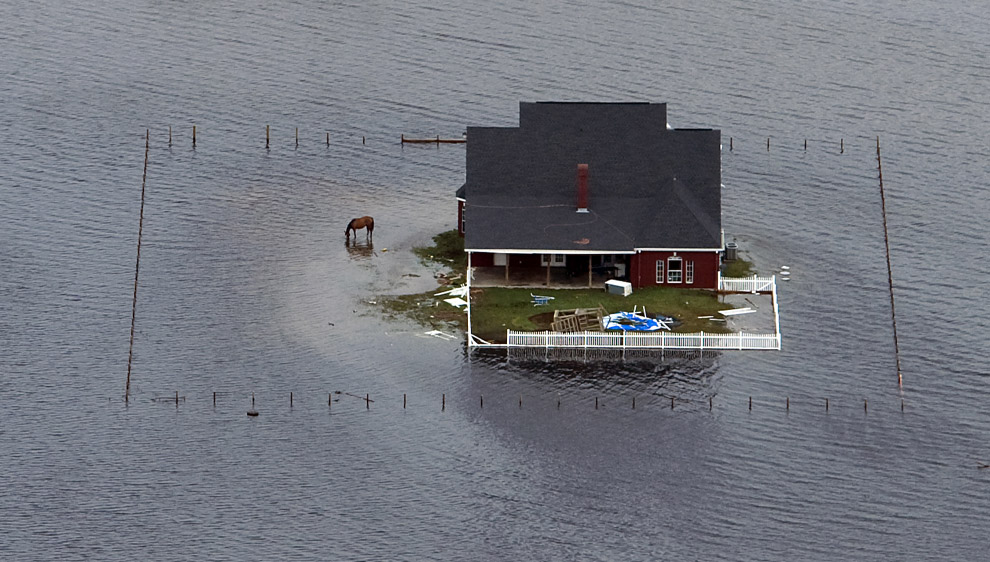
Thursday, August 07, 2008
Never say Hollywood can't learn from its mistakes. The producers have figured out how to please everyone: maintain earnestness regardless of the inherent absurdity of the genre, be 'topical' by way of empty allegory, be spectacularly violent, never stop moralizing. Meet these requirements, and a great deal of variety is possible: one has free reign to be jokey or serious, bright or gloomy, undisguisedly sexist, racist, homophobic, or none of the above, 'critical,' or 'wish fulfillment.' Or all of the above. These labels are simply not the creator's responsibility. Restore the superhero's propaganda function, in short, and in so doing prove Sontag's thesis that "pure camp" is always so for the future and not the present.** The comic book-loving nerds of my generation are now faced with the dubious realization of our pubescent dreams: the nerds have taken over Hollywood, and the responsibility thus falls to the Figure of the Superhero to 'teach us' something about the "human condition."Good news for culturemonkeys: Ryan has a great post on superhero cinema over there. (And here too.) It's more or less the definitive post on Dark Knight. But a few quick thoughts. First, I think Acephalous's attempt to rehabilitate the film from attempts to understand it solely as a "balls-out obvious apolog[y] for the authoritarian, repressive 'excesses' of global capitalism" is instructive, and definitely worth reading.
Second, Ryan writes that we are currently experiencing the"repetition-as-farce of the '50s"—but this doesn't strike me as a new phenomenon. Isn't it more the case that post-war American culture is perpetually returning to the '50s as a site of degrading, doomed unity?
This is to say that Jameson's claim that WWII is the moment of highest American nostalgia par excellence is, I think, fundamentally correct, with the revision that it's more the period from Dec. 1941 to August 29, 1949, the day the Russians exploded their first atomic bomb. The '50s are the memory of "the good '40s" combined with and juxtaposed against the reality of 8/29/49—they are the dawning but perpetually unfinished recognition of how it all will go / is going / has already gone wrong. In other words, the '50s themselves were a repetition-as-farce the first time around of the ideologically unacceptable, apocalyptic shock at the end of the previous decade—and we find ourselves going back to the '50s for answers whenever we get shocked again.
That's why, when 1973 is the year of disaster for American capitalism, Happy Days premieres in January 1974.
Friday, February 15, 2008
 I've been blogging for a few years now, and over that time I've linked to Philip K. Dick related material a whole lot of times. Here, in honor of reading Dr. Bloodmoney this week, are just a few PKD highlights, all to the glory of the man Fredric Jameson once called "the Shakespeare of science fiction":
* "How to Build a Universe That Doesn't Fall Apart Two Days Later." In some ways this is the definitive PKD essay, and it's the one referenced somewhat famously at the end of Waking Life. [+/-]
It was always my hope, in writing novels and stories which asked the question "What is reality?", to someday get an answer. This was the hope of most of my readers, too. Years passed. I wrote over thirty novels and over a hundred stories, and still I could not figure out what was real. One day a girl college student in Canada asked me to define reality for her, for a paper she was writing for her philosophy class. She wanted a one-sentence answer. I thought about it and finally said, "Reality is that which, when you stop believing in it, doesn't go away." That's all I could come up with. That was back in 1972. Since then I haven't been able to define reality any more lucidly.* Another great essay at Grey Lodge Occult Review: "If You Find This World Bad, You Should See Some of the Others."But the problem is a real one, not a mere intellectual game. Because today we live in a society in which spurious realities are manufactured by the media, by governments, by big corporations, by religious groups, political groups—and the electronic hardware exists by which to deliver these pseudo-worlds right into the heads of the reader, the viewer, the listener. Sometimes when I watch my eleven-year-old daughter watch TV, I wonder what she is being taught. The problem of miscuing; consider that. A TV program produced for adults is viewed by a small child. Half of what is said and done in the TV drama is probably misunderstood by the child. Maybe it's all misunderstood. And the thing is, Just how authentic is the information anyhow, even if the child correctly understood it? What is the relationship between the average TV situation comedy to reality? What about the cop shows? Cars are continually swerving out of control, crashing, and catching fire. The police are always good and they always win. Do not ignore that point: The police always win. What a lesson that is. You should not fight authority, and even if you do, you will lose. The message here is, Be passive. And—cooperate. If Officer Baretta asks you for information, give it to him, because Officer Beratta is a good man and to be trusted. He loves you, and you should love him.
So I ask, in my writing, What is real? Because unceasingly we are bombarded with pseudo-realities manufactured by very sophisticated people using very sophisticated electronic mechanisms. I do not distrust their motives; I distrust their power. They have a lot of it. And it is an astonishing power: that of creating whole universes, universes of the mind. I ought to know. I do the same thing. It is my job to create universes, as the basis of one novel after another. And I have to build them in such a way that they do not fall apart two days later. Or at least that is what my editors hope. However, I will reveal a secret to you: I like to build universes which do fall apart. I like to see them come unglued, and I like to see how the characters in the novels cope with this problem. I have a secret love of chaos. There should be more of it. Do not believe—and I am dead serious when I say this—do not assume that order and stability are always good, in a society or in a universe. The old, the ossified, must always give way to new life and the birth of new things. Before the new things can be born the old must perish. This is a dangerous realization, because it tells us that we must eventually part with much of what is familiar to us. And that hurts. But that is part of the script of life. Unless we can psychologically accommodate change, we ourselves begin to die, inwardly. What I am saying is that objects, customs, habits, and ways of life must perish so that the authentic human being can live. And it is the authentic human being who matters most, the viable, elastic organism which can bounce back, absorb, and deal with the new.
Of course, I would say this, because I live near Disneyland, and they are always adding new rides and destroying old ones. Disneyland is an evolving organism. For years they had the Lincoln Simulacrum, like Lincoln himself, was only a temporary form which matter and energy take and then lose. The same is true of each of us, like it or not.


We are accustomed to supposing that all change takes place along the linear time axis: from past to present to future. The present is an accrual of the past and is different from it. The future will accrue from the present on and be different yet. That an orthogonal or right-angle time axis could exist, a lateral domain in which change takes place -- processes occuring sideways in reality, so to speak -- this is almost impossible to imagine. How would we perceive such lateral changes? What would we experience? What clues -- if we are trying to test out this bizarre theory -- should we be on the alert for? In other words, how can change take place outside of linear time at all, in any sense, to any degree?
 * R. Crumb's comic, "The Religious Experience of Philip K. Dick."
* The first law of kipple is that kipple drives out nonkipple.
* Philip K. Dick and drugs.
* Philip K. Dick on Kurt Vonnegut. [+/-]
Interviewer: What did you think of Vonnegut’s attitude towards his characters (in Breakfast of Champions)?* Philip K. Dick and the Kennedy Assassination. (Warning: spoilers for the last book we're going to read this semester, also a Dick novel, Dr. Futurity.)
PKD: Disgusting and an abomination. I think that that book is an incredible drying up of the liquid sap of life in the veins of a person like a dead tree…that’s what I think. I also love Kurt Vonnegut.
* Profiles of Philip K. Dick from The New Yorker, The Washington Post, and the Times. Interviews with Philip K. Dick. Lethem on Philip K. Dick. Again. Stanislaw Lem on PKD.
* Jameson on Dr. Bloodmoney.
(cross-posted at culturemonkey)
Thursday, February 07, 2008
Thursday links:
* The North Pacific Trash Vortex, which was the size of Texas in September, is now larger than the entire United States. My horror about what we're doing to the planet has likewise quintupled in size in that time—though I must admit there's something eerily poetic about the idea that our wasteful patterns of consumption are creating a kind of shadow U.S. comprised entirely of garbage. Via Daily Kos.
* Science fiction and space technology, an educational site at NASA. Thanks to Klarr for the pointer.
* ...imagining the future is not an issue of imagination vs. actualization, and neither is it an issue of affirming the future, or "keeping the future alive." Rather, science fiction can configure the future as the conditions of possibility and constraint for social change in the present. A short essay concerning Jameson's Archeologies of the Future at CTheory.net, also via Klarr.
* "Marinaded in war and violence: Philip Dodd interviews J. G. Ballard."
* Top-earning dead celebrities, at Forbes. This year, no one can touch Elvis, not even John Lennon. Via Bitter Laughter.
* Rumors of her demise may be exaggerated: While Obama's supporters have raised $7.5 million dollars since Super Tuesday, Clinton's people have still raised about $4 million (almost enough to cover that loan she gave herself a few days ago). We don't want a repeat of New Hampshire on our hands—she's going to be in this fight for a while. Still, john in the comments notes that Obama's taken the lead in the Rasmussen prediction markets for what we think is the first time, 57-43, bolstering my claim that he is now the strong frontrunner. Can victory for the cult of Obama be far off?
* The Johns Hopkins Guide to Literary Theory & Criticism, online.
Friday, February 01, 2008
David Brin talks about the position of science fiction in academia. I have to say that I don't really agree with him about this at all—in my little corner of academia at least science fiction is the only literature anybody seems to be talking about.
Tuesday, August 14, 2007
Speaking of the nostalgia mode...
By special request, Muppet Week presents the Fraggle Rock theme (in both English and Spanish). Fraggle Rock is in a number of ways the most interesting of all the Muppet TV shows, certainly in terms of what it does with ethnicity and race using size as its pretty transparent metaphor. Like so many people of my benighted generation, though, I hardly ever watched it, because it was on HBO at a time when my family didn't even have cable.
Luckily, one of the primary uses of Netflix is the nostalgia mode. Also one of the primary uses of this blog, apparently.
Sunday, June 10, 2007
After eighteen months of anticipation, I found Consider the Lobster to be entirely anti-climatic, if not exactly a disappointment. It's just that these essays are old. They were old in 2005 when the book came out and they're old now—and the book's still not out in paperback for another month. John McCain's 2000 primary bid? A book review of Updike's Towards the End of Time from 1997? Was anyone anywhere crying out for this material to be anthologized?
If you like David Foster Wallace, as I do,1 these aren't bad essays—they're really not—but frankly at this point the 1990s are a half-remembered dream. Doesn't DFW have anything relevant to say about George Bush's America, or about anything that's happened since 2001?
For the sake of a link, though, here's the original version of "Authority and American Usage" from Harper's, a long treatise on language (even longer in the book) that's a pretty good read, if often quite wrong. For instance:
It probably isn't the whole explanation, but, as with the voguish hypocrisy of PCE [Politically Correct English], the obscurity and pretension of Academic English can be attributed in part to a disruption in the delicate rhetorical balance between language as a vector of meaning and language as a vector of the writer's own resume. In other words, it is when a scholar's vanity/insecurity leads him to write primarily to communicate and reinforce his own status as an Intellectual that his English is deformed by pleonasm and pretentious diction (whose function is to signal the writer's erudition) and by opaque abstraction (whose function is to keep anybody from pinning the writer down to a definite assertion that can maybe be refuted or shown to be silly). The latter characteristic, a level of obscurity that often makes it just about impossible to figure out what an AE sentence is really saying, so closely resembles political and corporate doublespeak ("revenue enhancement," "downsizing," pre-owned," "proactive resource-allocation restructuring") that it's tempting to think AE's real purpose is concealment and its real motivation fear.This is plainly true of some (okay, potentially many) academics writers, but not of the genre as a whole—and not true (say) of Duke's own Fredric Jameson, whom DFW singles out by name for attack in the book version.
And, needless to say, even Wallace must know that he of all writers really can't get away with criticizing obscurantist language.
Or take this:
Childhood is full of such situations. This is one reason why SNOOTlets tend to have a very hard social time of it in school. A SNOOTlet is a little kid who's wildly, precociously fluent in SWE (he is often, recall, the offspring of SNOOTs). Just about every class has a SNOOTlet, so I know you've seen them — these are the sorts of six- to twelve-year-olds who use whom correctly and whose response to striking out in T-ball is to cry out "How incalculably dreadful!" etc. The elementary-school SNOOTlet is one of the earliest identifiable species of academic Geekoid and is duly despised by his peers and praised by his teachers. These teachers usually don't see the incredible amounts of punishment the SNOOTlet is receiving from his classmates, or if they do see it they blame the classmates and shake their heads sadly at the vicious and arbitrary cruelty of which children are capable.There's something to this, too, of course—yes, sometimes social misfits bring their ostracization upon themselves!—but this gleeful valorization of bullies from a onetime victim strikes me as actually deeply sad. And once I noticed it I found echoes of it everywhere in Consider the Lobster: the tagalong wails of the geek still desperately trying to prove that he fits in, that he really is cool after all.
But the other children's punishment of the SNOOTIet is not arbitrary at all. There are important things at stake. Little kids in school are learning about Group-inclusion and -exclusion and about the respective rewards and penalties of same and about the use of dialect and syntax and slang as signals of affinity and inclusion. [35] They're learning about Discourse Communities. Kids learn this stuff not in English or Social Studies but on the playground and at lunch and on the bus. When his peers are giving the SNOOTlet monstrous quadruple Wedgies or holding him down and taking turns spitting on him, there's serious learning going on ... for everyone except the little SNOOT, who in fact is being punished for precisely his failure to learn. What neither he nor his teacher realizes is that the SNOOTlet is deficient in Language Arts. He has only one dialect. He cannot alter his vocabulary, usage, or grammar, cannot use slang or vulgarity; and it's these abilities that are really required for "peer rapport," which is just a fancy Elementary-Ed term for being accepted by the most important Group in the little kid's life.
This was a much more harsh-sounding review than I intended to write. Really, the book is okay, even good—it just feels much very out of its time, and suffers for it. The Adult Video News essay that starts off the book in particular is notably good, and used to be online, though it unfortunately seems to have been taken off. The title essay, on the other hand, is still up, and is also good, if lobsters are indeed something you feel like considering.
--
1 Sometimes.


 Posts


